
A Guide for Parents of Adult LGBTQ+ Children

Your child just came out as gay, told you they are transgender, or said they are questioning their gender identity. What now?
Many parents experience a mix of emotions in this moment: love, confusion, fear, pride, grief, or uncertainty. If this is where you are right now, take a breath. You do not need to have every answer immediately.
What matters most is staying present, staying curious, and staying at the table with your child as you both navigate this new chapter together.
This guide will help parents learn how to support an adult LGBTQ+ child while also taking care of themselves during the process.
1. Become a Student of Your Child’s World (Without Making Them the Teacher)
When your child comes out, it is completely natural to have a lot of questions. You may want to understand their identity, their experience, or what this means for their future.
However, asking your child to explain every detail about sexual orientation, gender identity, or LGBTQ+ culture can be exhausting for them. They are already navigating their own journey.
One of the most supportive things a parent can do is take the initiative to learn independently.
The Kitchen Table Tip
Don’t wait for your child to bring you resources. Instead, begin learning on your own.
You might:
Look up LGBTQ terminology
Read memoirs by queer authors
Watch documentaries about gender identity and sexuality
Follow LGBTQ educators or therapists online
When you say something like:
"I learned about the difference between gender identity and gender expression today,"
it sends a powerful message to your child: I care enough about you to learn.
That effort builds trust and signals that you are trying to understand their world.
2. Find Your Own "Table" of Support
Supporting an LGBTQ+ child can bring up complicated emotions for parents. You may feel proud and supportive, while also feeling confused, worried, or unsure how to respond.
You do not have to process these feelings alone.
At the same time, your child should not be your only source of education or emotional support. They are also navigating their own identity journey.
Finding your own supportive community allows you to ask questions, work through emotions, and learn without putting extra pressure on your child.
The Kitchen Table Tip
Consider taking these proactive steps:
Join a Parent Support Group
Organizations like PFLAG and The Trevor Project offer resources, support groups, and educational tools for families of LGBTQ individuals.
Follow LGBTQ Educators
Many therapists, educators, and advocates share helpful information about gender identity, sexuality, and affirming parenting on social media and blogs.
Read Books for Parents
Two excellent starting points include:
These resources can help parents understand terminology, identity development, and how to support their child with compassion.
Doing this research communicates something important to your child: you are actively working to understand and support them, not simply tolerating the news.
3. Practice "Radical Validation"
Validation means acknowledging and respecting someone else's emotional experience, even if you do not fully understand it yet.
For parents of LGBTQ+ children, validation can be one of the most powerful forms of support.
Validation does not mean you have to understand every nuance of gender identity or sexual orientation immediately. It simply means you believe your child when they tell you who they are.
Examples of validating responses include:
“Thank you for trusting me with this.”
“I’m glad you told me.”
“I love you, and I want to learn how to support you.”
“I may have questions, but I’m here for you.”
These statements communicate safety and acceptance. For many LGBTQ+ adults, that support from family can make a profound difference in their well-being.
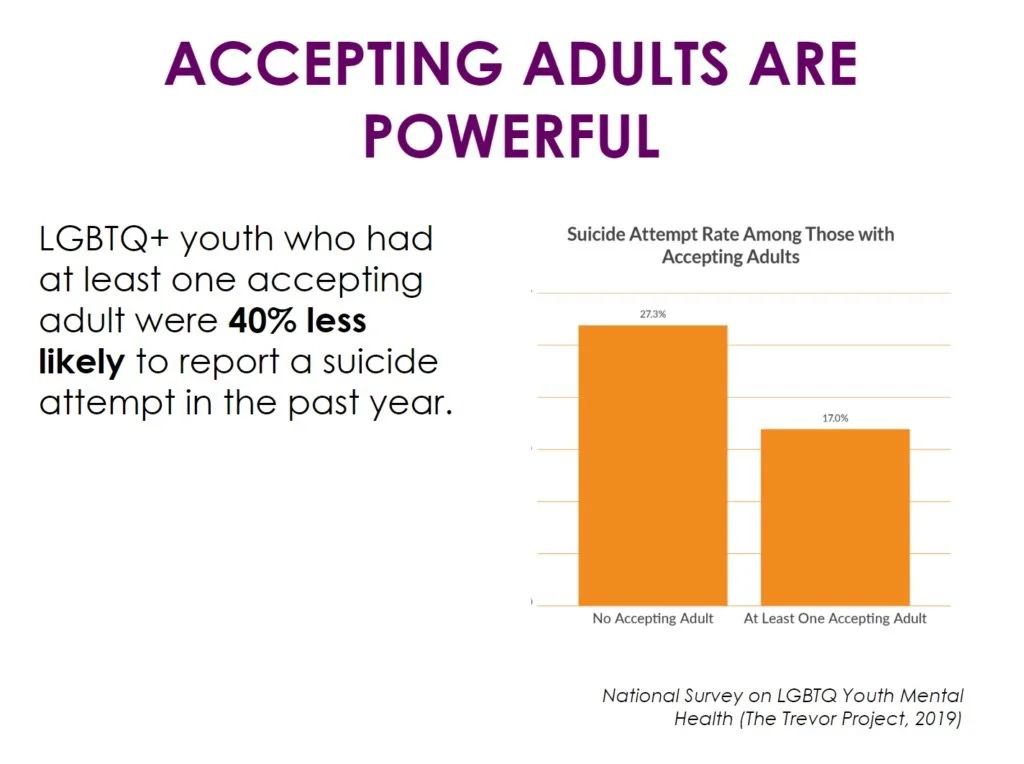
Research shows that just one supportive adult can reduce the risk of suicide in LGBTQ+ youth by 40%. You don’t need a PhD in gender studies to be that person, just practice radical acceptance and validation.
4. It’s Okay to Grieve
Many parents experience a sense of loss when learning about their child’s identity. This can include grieving the future they imagined from the moment they became parents—the traditions they expected, the relationships they envisioned, or even the name they gave their child.
You may have had preconceived ideas about what your relationship with an adult daughter or son might look like. Now, you may be wondering how things will change or whether your relationship will feel the same.
These emotions are real and valid.
Grief does not mean you don’t love or support your child. It simply means you are adjusting to a new understanding of who they are.
However, it’s important to remember that your child should not be responsible for holding or managing your grief. They are navigating their own emotional journey as well.
The Kitchen Table Tip
Find supportive spaces where you can process your feelings openly.
This might include:
Joining a parent support group
Talking with a trusted friend or mentor
Having a place to express your fears, confusion, or sadness allows you to show up for your child with more clarity and compassion.
Many families find that LGBTQ-affirming therapy can help parents process emotions while strengthening their relationship with their child.

*nb means non-binary.
5. Navigating the “Outing” Dilemma
Many parents worry about how to talk about their child with others.
You might wonder:
If I use their new pronouns, am I outing them?
If I use the old ones, am I misgendering them?
This situation can feel confusing, but it doesn’t have to be an all-or-nothing choice.
One helpful strategy is using gender-neutral language.
Instead of saying:
“my daughter” or “my son”
You might say:
“my kid”
“my child”
“my eldest”
Instead of relying on pronouns, you can also restructure sentences using their name.
Just as important is having an open conversation with your child about how they want to be referred to in different situations.
Try asking questions like:
“How do you want me to refer to you when I’m talking to neighbors or coworkers?”
“Who do you want to know first?”
“Is there anyone you’re not ready to tell yet?”
Coming out is your child’s story to share. Let them set the boundaries and honor their wishes whenever possible.
6. Pronouns: Practice Makes Progress
Learning new pronouns or a new name can take time, especially if you have used different language for many years.
You may accidentally use the wrong name or pronoun—sometimes called “deadnaming.” If that happens, try to correct yourself briefly and move forward.
A simple response might look like:
“I’m sorry, I meant [correct name or pronoun]. Thanks for catching that.”
Then continue the conversation.
Long apologies or making the moment about your embarrassment can unintentionally put emotional pressure on your child.
What matters most is consistent effort and progress over time.
The Kitchen Table Tip
Practice using your child’s pronouns privately so they feel more natural in conversation.
For example, you might narrate everyday thoughts while doing chores:
“They’re visiting a friend tomorrow.”
“I hope they liked the lunch I made.”
Practicing in private helps build confidence so the language becomes more automatic in public conversations.
7. Managing Real and Valid Concerns
Many parents feel worried about their child’s future after coming out, especially when they read news stories about discrimination, safety, or legal rights affecting LGBTQ people.
These fears are understandable.
Parents naturally want to protect their children.
But it can help to focus on what is within your control.
You cannot control laws, social attitudes, or every situation your child may encounter in the world. What you can control is the environment inside your home.
When a home is accepting and affirming, it becomes a powerful protective factor.
A home where someone can sit at the kitchen table and be fully themselves creates resilience that carries into the outside world.
The Kitchen Table Tip
When your thoughts start spiraling into “What if?” scenarios, gently shift your focus to “What is true right now.”
Right now:
Your child is here.
They trusted you enough to share who they are.
You are learning together.
Those truths matter more than imagined futures.
Final Thoughts
When a child comes out as LGBTQ+, families often feel like they are entering unfamiliar territory.
But this moment does not have to become a crisis.
With curiosity, compassion, and support, it can become an opportunity to deepen your relationship and learn more about the person you love.
At Kitchen Table Psychotherapy, we specialize in helping individuals and families navigate these important conversations with care and understanding.
Transition, identity exploration, and family change are not problems to solve—they are experiences that deserve thoughtful support.
If you’re feeling stuck, overwhelmed, or unsure where to start, therapy can help.
You don’t have to navigate this journey alone.
There’s always a seat for you at the table.